Driving in the U.S.: A Complete Guide for Foreign Drivers Getting Licensed

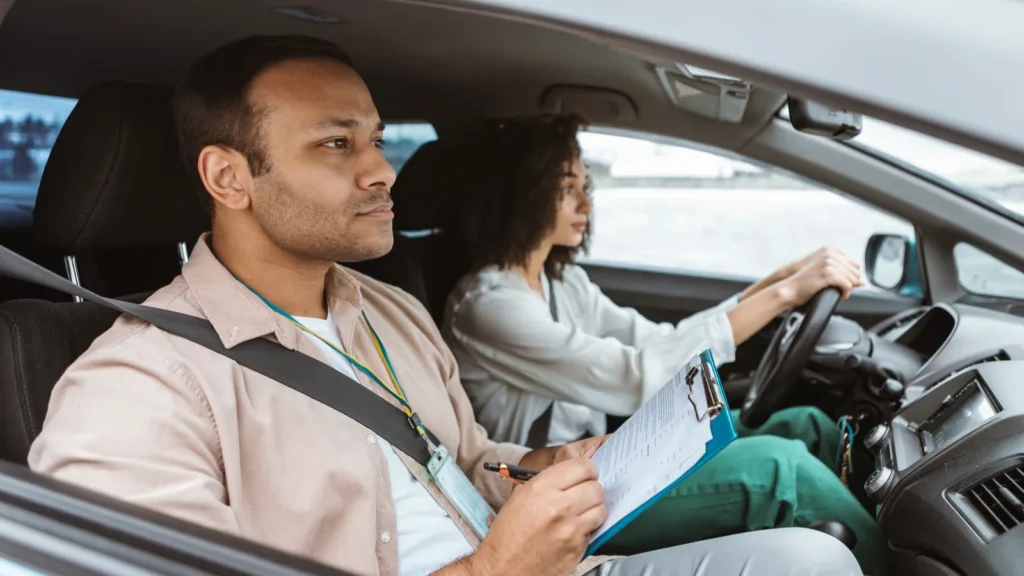
If you already know how to drive in another country, getting a U.S. driver’s license is usually not about learning how to control a vehicle. The biggest challenge is adapting to traffic laws, road signs, and driving habits that may be different from what you are used to.
Many experienced international drivers struggle with the U.S. driving test because they rely on habits from their home country. However, the DMV written test and road test are based on American traffic laws, not personal driving experience.
The United States places strong emphasis on specific rules that may surprise foreign drivers, including right-of-way procedures, four-way stops, school bus laws, lane discipline, and defensive driving practices.
Understanding these differences before taking your DMV exam can make the licensing process much easier.
Start With the U.S. Driver Licensing Process
The licensing process is slightly different depending on the state, but most states follow a similar structure:
- Identity and residency verification
- Written knowledge test
- Learner’s permit issuance
- Behind-the-wheel practice
- Road test
- Driver’s license approval
The first step is proving who you are and where you live.
Common documents required include:
- Proof of identity;
- Proof of legal presence or immigration status when required;
- Social Security number documentation or proof of ineligibility;
- Proof of state residency;
- Existing foreign driver’s license if applicable.
Many states require multiple documents, so applicants should review their state DMV requirements before visiting an office.
Some states have agreements or special procedures for drivers from certain countries, which may allow exemptions from parts of the licensing process. Never assume your previous license automatically transfers. Always check the requirements of the state where you plan to apply.
U.S. Driving Rules That Surprise Foreign Drivers
Four-Way Stops Work Differently
The four-way stop is one of the most confusing rules for many international drivers.
In some countries, drivers are used to priority roads, traffic circles, or different intersection systems. In the United States, a four-way stop follows a simple rule:
- Every vehicle must come to a complete stop.
- The first vehicle to stop is usually the first vehicle to go.
- If two vehicles arrive at the same time, the driver on the right has the right-of-way.
There is no “main road” or priority street at a four-way stop. The order depends on arrival time.
A common mistake among foreign drivers is waiting for another driver to move first because they are unsure who has priority. This can create confusion and hesitation during the road test.
Right Turn on Red Is Common
The ability to turn right at a red traffic light surprises many drivers from countries where this is not allowed.
In most U.S. states, drivers may turn right on red after:
- Coming to a complete stop;
- Checking for pedestrians and vehicles;
- Confirming that no sign prohibits the turn.
However, this rule is not universal.
For example, certain areas, including parts of New York City, restrict right turns on red unless signs specifically allow them.
The key lesson for foreign drivers is that traffic signs always override general rules.
School Bus Rules Are Extremely Important
School bus laws are among the most heavily emphasized topics on DMV tests.
When a school bus activates its flashing red lights and extends the stop arm, drivers must stop.
On many undivided roads, vehicles traveling in both directions must stop until the bus turns off the warning signals and begins moving again.
Ignoring school bus laws can result in serious penalties, including fines and license consequences.
The reason for these strict rules is child safety. Students may enter or leave the bus and cross the roadway unexpectedly.
Passing on the Right Is Allowed in Certain Situations
Some international drivers are surprised that passing on the right can be legal in the United States.
On roads with multiple lanes traveling in the same direction, vehicles may move into another lane when it is safe and legal.
However, drivers must:
- Check mirrors;
- Check blind spots;
- Signal before changing lanes;
- Maintain safe spacing.
Lane discipline is important. Drivers are expected to understand that vehicles may approach from either side on multi-lane highways.
Speed Limits Are Strictly Enforced
Many foreign drivers notice that speed enforcement feels different in the United States.
Drivers are expected to follow posted speed limits, especially in:
- School zones;
- Residential neighborhoods;
- Construction areas.
A common misconception is that driving slightly above the speed limit is always acceptable because other drivers do it.
The DMV test does not evaluate what people commonly do. It evaluates what the law requires.
Preparing for the DMV Written Test in English
Many states offer the written knowledge test in multiple languages. Some states also provide options such as:
- Audio versions;
- Translated materials;
- Interpreter assistance when allowed.
Taking the test in your strongest language can improve understanding and does not reduce your chances of passing.
However, learning important English driving vocabulary is still essential because traffic signs, road markings, and many driving situations use English terms.
Important words to know include:
- Yield — give the right-of-way;
- Merge — combine into another lane;
- Right-of-way — legal priority to proceed;
- Shoulder — area beside the roadway;
- Median — barrier or dividing area between opposite traffic;
- Crosswalk — designated pedestrian crossing area;
- Curb — edge of the road beside a sidewalk.
Even if your test is available in another language, road signs themselves will usually remain in English.
Building Confidence for the Road Test
Passing the written test is only the first step. The driving test evaluates whether you can safely operate a vehicle according to U.S. standards.
A good practice order is:
1. Residential Streets
Start with quieter areas where you can practice:
- Stop signs;
- Speed control;
- Turning;
- Parking;
- Checking surroundings.
2. Multi-Lane Roads
Next, practice:
- Lane changes;
- Proper signaling;
- Maintaining safe following distance;
- Understanding traffic flow.
3. Highway Merging
Highway entrances are one of the biggest sources of anxiety for new drivers.
The most important skill is speed matching.
Many new drivers enter highways too slowly because they are focused only on finding an opening.
A safer approach is:
- Accelerate on the entrance ramp;
- Match the speed of traffic;
- Check mirrors and blind spots;
- Merge smoothly.
Highway driving becomes easier with practice and understanding of traffic patterns.
Real Examples of Common Foreign Driver Mistakes
A driver from a country where roundabouts are common may hesitate at a four-way stop because they expect a different priority system. However, in the United States, the correct approach is to stop completely and follow arrival order.
Another example involves flashing headlights.
In some countries, flashing headlights may mean “I am coming through” or “move aside.”
In the United States, flashing headlights often communicate something different. A driver may use them to indicate that another vehicle can proceed, or to warn another driver about a hazard ahead.
Understanding these cultural differences helps prevent misunderstandings on American roads.
Final Thoughts
Driving in the United States as a foreign driver requires more than knowing how to operate a vehicle. It requires learning a new set of traffic expectations and legal standards.
The biggest challenges are usually not mechanical driving skills but understanding American rules about intersections, lane changes, school buses, speed limits, and right-of-way.
By studying your state’s DMV handbook, learning key English driving terms, practicing common road situations, and avoiding assumptions based on your home country’s driving culture, you can prepare more effectively for both the written test and the road test.
A strong understanding of U.S. traffic laws will not only help you earn your license but also make you a safer and more confident driver.
Related guides