School Bus Laws: When Must You Stop?

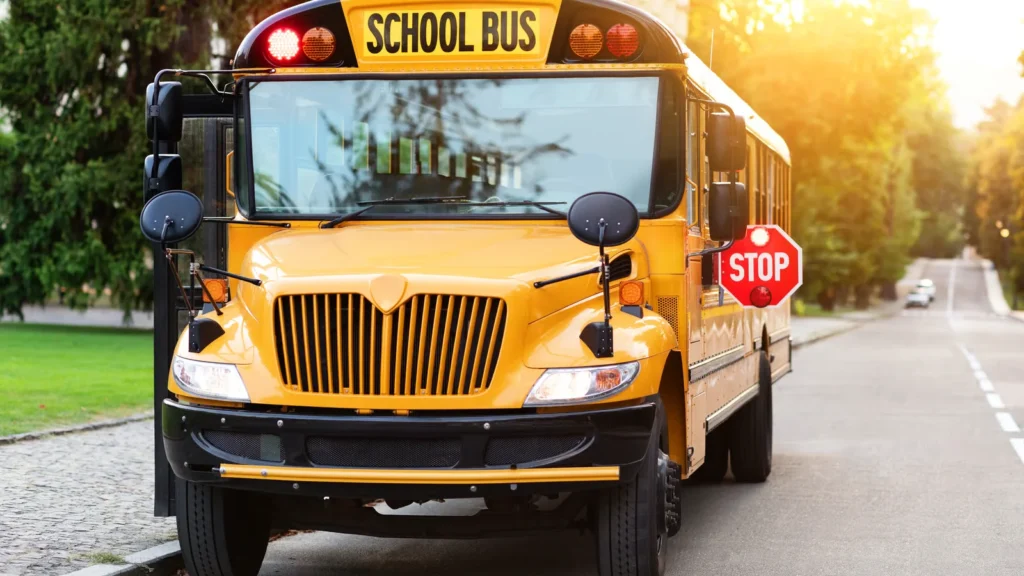
School bus laws are among the most important traffic rules for drivers in the United States. Every day, millions of children travel to and from school on buses, and drivers must understand when they are required to stop and when they can continue driving.
Failing to stop for a school bus can put children at serious risk and may result in significant legal consequences. However, many drivers are unsure about situations involving divided highways, multiple la
While the general princip
Un
What Do
School buses use a combination of flashing
Yellow Flashing Lights
Ye
When drivers see
- Slow down.
- P
- Watch for children near the roadway
- Avoid
The purpose of yellow lights is to give drivers time to
Red Flashing Lights and Stop Arm
Red fla
Drivers approaching a stopped
- Stop before reachin
- Remain stopped while the red lig
- Wait until the lights
The exact stopping dist
When
In most U.S. states, drivers must stop when a school bus
This applies
- You are behind the bus traveling in the same direction.
- You are approaching the bus from the opposite direction on an undivided road.
- Children are loading or unloading.
Drivers should never attempt to pass a stopped school bus because children may cross the road unexpectedly.
Do You Have to Stop for a School Bus on the Opposite Side of the Road?
This is one of the most common questions about school bus laws.
The answer depends on the type of roadway and state law.
Two-Lane Roads
On a typical two-lane road without a physical divider, drivers traveling in both directions usually must stop for a school bus with flashing red lights.
Example:
A school bus stops on a rural road to pick up children. Vehicles approaching from both directions must stop because children may need to cross the roadway.
Divided Highways
Rules can be different on divided highways.
In many states, drivers traveling in the opposite direction may not be required to stop if there is a physical barrier separating traffic, such as:
- A concrete median.
- A grass divider.
- A raised separation area.
However, the exact definition of a divided highway varies by state, so drivers should check local laws.
Multiple-Lane Roads
Roads with several lanes can have different requirements depending on:
- Whether the roadway is divided.
- Whether there is a physical barrier.
- State-specific regulations.
Drivers should never assume they can pass simply because there are multiple lanes.
How Far Away Should You Stop From a School Bus?
Drivers should stop at a safe distance that allows children and the bus driver enough space.
The exact distance requirement varies by state, but drivers should generally:
- Stop far enough behind the bus to see the entire vehicle.
- Avoid blocking crosswalks or intersections.
- Remain stopped until the bus signals that it is safe to proceed.
Drivers should not move forward slowly while children are entering or exiting the bus.
When Can You Continue Driving?
Drivers may continue only after the school bus:
- Turns off its flashing red lights.
- Retracts the stop arm.
- Begins moving again.
If there is any uncertainty, waiting a few extra seconds is safer than passing too soon.
School Bus Laws for Different Types of Vehicles
School bus stopping laws generally apply to most vehicles, including:
- Passenger cars.
- Pickup trucks.
- SUVs.
- Motorcycles.
- Commercial vehicles.
Large vehicles may require additional stopping distance, so commercial drivers must be especially careful near school buses.
Common School Bus Law Mistakes
Passing a Bus Because Children Are Not Visible
Some drivers assume they can continue because they do not see children crossing. However, children may be hidden by the bus or approaching from another direction.
Following Too Closely Behind a Bus
Drivers who follow too closely may not notice the warning lights or have enough time to stop.
Passing After the Bus Stops but Before Lights Turn Off
A school bus stop is not complete until the bus driver has finished the loading or unloading process and the warning signals are no longer active.
Assuming Every State Has Identical Rules
School bus laws are similar but not identical nationwide. Drivers should learn the rules where they drive most often.
Ignoring Flashing Yellow Lights
Yellow warning lights are an early signal that the bus is preparing to stop. Drivers should slow down and prepare.
Penalties for Passing a Stopped School Bus
Penalties for illegally passing a school bus vary by state but may include:
- Fines.
- Points on a driver’s license.
- Increased insurance costs.
- Additional penalties for repeat offenses.
Some states use cameras on school buses to help enforce violations. The availability and rules for these programs vary by location.
School Bus Safety Tips for Drivers
Drivers can help protect students by following simple habits:
Stay Alert in School Areas
Be especially careful near:
- Schools.
- Residential neighborhoods.
- Bus stops.
- Areas with children walking.
Avoid Distractions
Drivers should keep their attention on the road and watch for bus signals.
Be Patient
A school bus stop may take only a short time. Waiting safely is better than creating a dangerous situation.
Expect Children to Behave Unexpectedly
Children may not always recognize traffic dangers. Drivers should slow down and stay prepared.
School Bus Laws and Right of Way
School bus laws are closely connected to right-of-way principles. When a bus displays warning signals, drivers must yield because children have priority and need protection while entering or leaving the vehicle.
Stopping for a school bus is not simply a courtesy. It is a legal requirement designed to reduce the risk of pedestrian crashes.
Frequently Asked Questions About School Bus Laws
Do you always have to stop when a school bus has flashing red lights?
In most situations, yes. Drivers must stop when a school bus is stopped with flashing red lights and an extended stop arm, unless a specific state exception applies.
Do you have to stop for a school bus on a divided highway?
It depends on state law and the type of divider separating traffic. Some states allow opposite-direction traffic to continue on physically divided highways.
How long should you wait after a school bus stops?
Wait until the red lights stop flashing and the stop arm retracts before continuing.
Can you pass a school bus if no children are crossing?
No. Drivers must follow the bus signals, not simply whether children are visible.
Are school bus laws the same in every state?
No. The general safety rules are similar, but specific requirements and penalties vary by state.
Conclusion
School bus laws exist to protect children during one of the most vulnerable moments of their day: getting on and off the bus. Knowing when to stop, understanding bus signals, and following state-specific rules are essential parts of responsible driving.
A few seconds of patience can help prevent dangerous situations and keep students safe. Every driver shares responsibility for making roads safer, especially around school buses and areas where children are present.
Related guides