Traffic Rules in the U.S.: A Guide for New Drivers

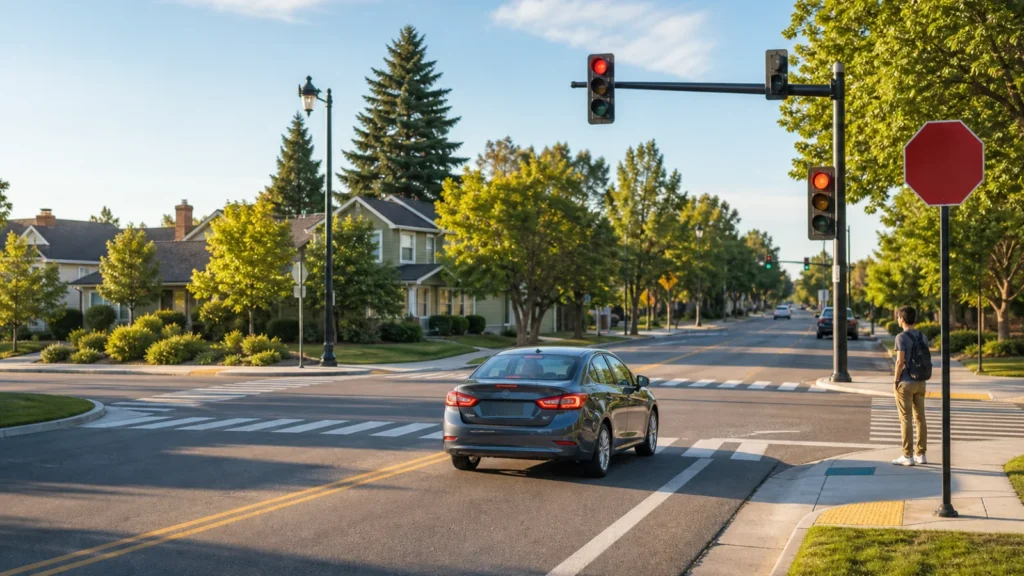
Learning the traffic rules in the U.S. is an important step toward becoming a safe, confident driver. Whether you are preparing for a learner’s permit test, getting ready for your road test, or simply refreshing your knowledge, understanding how signs, signals, intersections, and road markings work can help you make better decisions behind the wheel.
Traffic rules are designed to help road users share space safely. But they are not just a list of facts to memorize for a test. They guide everyday choices: when to stop, when to yield, which lane to use, and how to respond when conditions change.
This guide explains some of the key traffic rule topics new drivers should study. Because specific laws can vary by state, use this article as a starting point and check your state’s current driver handbook for the rules that apply where you live.
- Why Traffic Rules Matter
- 1. Learn to Read Traffic Signs and Signals
- 2. Understand Right-of-Way
- 3. Follow Lane Markings and Turn Carefully
- 4. Choose a Safe Speed and Leave Space
- 5. Share the Road with Other Road Users
- 6. Know the Rules for Special Situations
- How to Study Traffic Rules for Your Permit Test
- Build Safe Habits, Not Just Test Knowledge
Why Traffic Rules Matter
Following traffic rules helps drivers predict what others may do and communicate their own intentions. A driver who recognizes a sign early, signals before turning, and approaches an intersection carefully gives other road users more time to react.
Road safety is a shared responsibility. Drivers need to watch for pedestrians, cyclists, and other people using the road, not just nearby cars. The National Highway Traffic Safety Administration advises road users to obey signs and signals and emphasizes that everyone has a role in pedestrian safety. (NHTSA)
For new drivers, learning the rules also helps reduce uncertainty. When you know what a sign means or how to approach a marked lane, you can focus more attention on the traffic around you.
1. Learn to Read Traffic Signs and Signals
Traffic signs provide instructions, warnings, and directions. Their shapes, colors, symbols, and placement can all help you understand their purpose. A regulatory sign tells drivers what they must or must not do. A warning sign alerts drivers to a potential hazard or change in the road. Guide signs provide information about routes, destinations, or services.
Traffic signals also control how vehicles and pedestrians move through intersections. A red signal generally means stop; a yellow signal warns that the signal is changing; and a green signal permits movement when the way is clear. Always look for additional signs or signals that may affect a specific lane or turn.
The Federal Highway Administration’s Manual on Uniform Traffic Control Devices sets national standards for traffic control devices, including signs, road markings, and signals. Still, drivers should study the examples and rules in their own state’s handbook, since it is written for local requirements and test preparation. (DOT)
A useful study habit is to connect a sign’s meaning to the action it requires. Instead of memorizing only its name, ask: What should I do when I see this sign? Do I need to slow down, stop, yield, or prepare for a road condition?
2. Understand Right-of-Way
Right-of-way rules help drivers determine who should proceed first in situations where paths may cross. They are especially important at intersections, crosswalks, and places where vehicles merge.
The safest approach is to slow down, look for signs and signals, and never assume another road user will yield. Even when you believe you have the right-of-way, remain alert and be prepared to avoid a collision. The California Driver’s Handbook makes this safety point directly and discusses right-of-way in relation to other vehicles, pedestrians, bicyclists, and motorcyclists. (CA)
Pay particular attention to pedestrians in or approaching crosswalks. Before turning, check the crosswalk in the direction you are moving. A green light does not mean you can ignore people crossing or other hazards in your path.
Right-of-way rules can be easy to confuse because the correct action depends on the signs, signals, and layout of the intersection. Study examples in your state handbook, then practice identifying what you would do in each situation.
3. Follow Lane Markings and Turn Carefully
Lane lines show how traffic is organized. They can separate traffic moving in the same or opposite directions, indicate where passing is permitted, or guide drivers into lanes for specific movements. Arrows painted on the road may indicate that a lane is for turning, continuing straight, or serving more than one movement.
Before changing lanes, check your mirrors, signal, and look for other vehicles in your blind spots. Move only when there is enough room to do so safely. A turn signal communicates your intention, but it does not give you permission to move into an occupied lane.
When turning, slow down appropriately and make sure you are in the correct lane before you reach the intersection. Watch for pedestrians and cyclists, and follow posted signs and pavement arrows. Rules for particular turns and lane positions can depend on state law and road design, so consult your local handbook for exact requirements.
4. Choose a Safe Speed and Leave Space
Posted speed limits are important, but they do not always tell you what speed is safe in every situation. Rain, fog, darkness, traffic, construction, and road conditions can affect how much time and distance you need to react.
Give yourself space to respond if the vehicle ahead slows down or stops. Following too closely leaves less time to recognize a problem and act. When traffic is moving slowly, maintain a safe gap and avoid sudden lane changes.
As you prepare for a knowledge or road test, pay attention to speed-limit signs and any temporary signs in work zones. Also practice adjusting your speed to the conditions instead of focusing only on the number shown on a sign.
A driver’s responsibilities extend beyond watching other cars. Pedestrians, bicyclists, motorcyclists, and people using mobility devices may be present in or near the roadway. They can be harder to see, especially at intersections, in low light, or when a vehicle blocks your view.
Before turning or opening a car door, check for people approaching on foot or by bicycle. Leave room when passing cyclists and stay alert for motorcycles, which can be less visible in traffic. Slow down near crosswalks, school areas, and locations where people may enter the road.
Never assume that another person has seen you. Make your movements predictable, use signals, and give yourself enough time to react.
6. Know the Rules for Special Situations
Some traffic situations require extra attention, such as approaching a school bus, responding to an emergency vehicle, driving through a work zone, or crossing railroad tracks. The exact requirements can vary by state and by situation. For example, rules for when traffic must stop for a school bus may depend on the road configuration and local law.
When you encounter a special situation, look for signs, signals, and instructions from authorized personnel. Reduce distractions and follow the directions provided. Do not rely on what a driver in another state did; check the current guidance for your state.
Official state driver manuals are useful study resources because they explain local driving requirements and may include the information used to prepare for knowledge tests. Connecticut’s DMV, for example, identifies its driver manuals as a resource for test preparation, while Indiana’s BMV points drivers to its current electronic manual for updated information. (CT)
How to Study Traffic Rules for Your Permit Test
Start with your state’s current driver handbook. Read a few sections at a time and take notes on rules that are unfamiliar. Focus on understanding why a rule exists and what action it requires, rather than memorizing words without context.
Next, use practice questions to check your understanding. When you miss a question, review the explanation and find the related topic in the handbook. This helps you learn from mistakes and identify patterns in the areas that need more review.
You can also observe traffic as a passenger. Notice how drivers respond to signs, lane markings, pedestrians, and changing signals. Think through what you would do before the vehicle reaches an intersection. When you begin supervised practice, follow your instructor’s directions and practice in a safe, appropriate setting.
Build Safe Habits, Not Just Test Knowledge
Learning the traffic rules in the U.S. is about more than passing a test. It is about building habits that help you make careful decisions every time you drive. Read signs early, obey signals, use your turn signal, check for pedestrians, and stay prepared for unexpected changes in traffic.
Because traffic laws and licensing requirements can differ by state—and may change over time—always consult the latest official driver handbook from your state’s DMV or equivalent agency. Use practice quizzes to reinforce what you learn, then apply those rules consistently on the road.
Ready to check your knowledge? Take a DrivPrep traffic rules practice quiz and review the explanations for each answer.
Related guides